Men's health · Tests and results
A 50-Gram Prostate: Is It Enlarged? How to Read Your Ultrasound Report
The report says 50 grams, maybe with the word "enlarged" next to it, and the follow-up visit is weeks away. Here is how to read each number on that page, and what the size can and cannot tell you.
By the yardsticks researchers use, a 50-gram prostate is enlarged: about two and a half times the 20 grams of a healthy young adult's gland. Size alone settles little, though. NIDDK, part of the NIH, notes that symptoms may not track size, and treatment talk starts with how much your symptoms bother you.
Before you read on
I am not a doctor or radiologist, and this page cannot read your scan for you. If you cannot urinate at all, see blood in your urine, or have painful, urgent trips with fever and chills, do not wait for the follow-up visit: get seen now.
You will find no affiliate links on this page. A single link leads to the NutraRank review of one prostate formula, and that review page is where affiliate links appear. Each research figure below comes from a source listed at the end.
How big is a 50 gram prostate?
About two and a half times the size of a healthy young adult's prostate, which weighs around 20 grams.
Autopsy data pooled from 10 studies and more than 1,000 prostates put the normal gland at 20 grams, plus or minus 6, in men aged 21 to 30. In those data the weight stayed essentially the same with age unless benign prostatic hyperplasia (BPH) developed.1 BPH means the prostate has grown larger than normal, and the growth is not caused by cancer.2
The National Institute of Diabetes and Digestive and Kidney Diseases (NIDDK) describes two growth phases: the prostate doubles in size early in puberty, and a second phase starts around age 25 and continues throughout life. BPH often shows up late in that second phase.2 So a report of 50 grams in your fifties or sixties usually describes a gland that has kept growing, and that is common: in the autopsy data, half of men aged 51 to 60 had BPH under the microscope.1
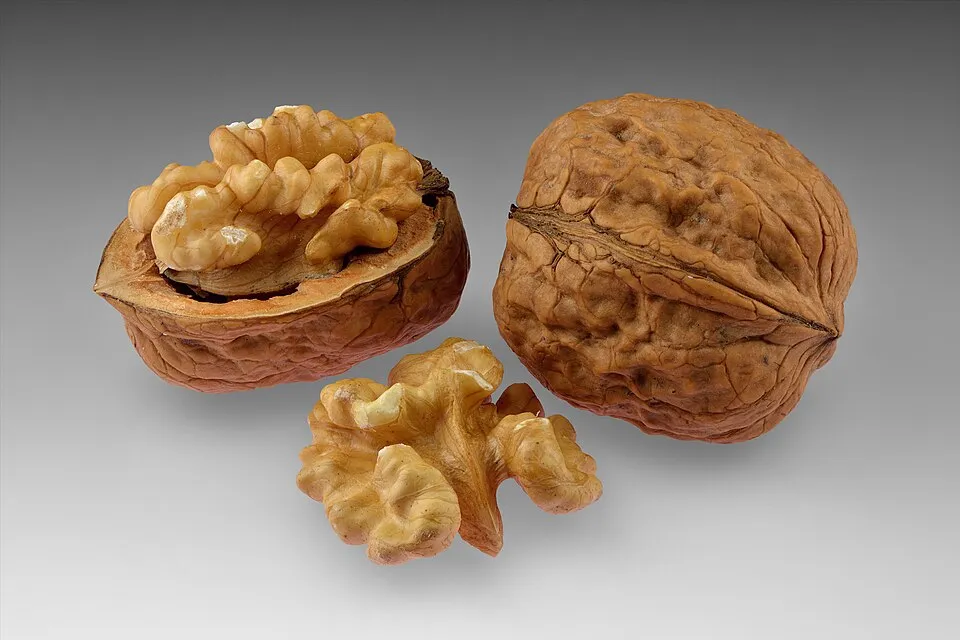
Is 50 cc the same as 50 grams?
They move together very closely, so ask which one your report uses.
Reports give prostate size as a volume, in cubic centimeters (cc) or milliliters (mL), which are the same unit, or as an estimated weight in grams. In a study of 20 glands removed at surgery, with their true volume measured by water displacement, volume in cubic centimeters tracked weight in grams very closely.4 They move together very closely, so ask which one your report uses.
How do you read the numbers on your prostate ultrasound report?
Look for three measurements, one volume, and sometimes a line about urine left in the bladder.
The volume is usually calculated rather than measured directly. The most common method treats the gland as an ellipsoid, an egg shape, and multiplies height by width by length by pi divided by 6, which is about 0.52. The same surgical study found that this calculated volume consistently underestimates the true volume, so read it as an estimate that tends to come out a little low.4
A worked example: if your report lists 5.0 cm by 4.5 cm by 4.2 cm, the calculation is 5.0 × 4.5 × 4.2 × 0.52, which comes to about 49 cc. That is how three short measurements turn into a number near 50.
| Line on the report | What it means |
|---|---|
| Three dimensions, such as 5.0 × 4.5 × 4.2 cm | Length, width and height of the gland, the inputs to the volume4 |
| Volume, in cc or mL | Calculated size. 49 cc is a volume; weight in grams tracks volume closely4 |
| Post-void residual (PVR), in mL | Urine left in the bladder after you pee. NIDDK says 100 to 150 mL or more means the bladder is not emptying completely5 |
| Transrectal ultrasound (TRUS) | A probe slightly larger than a pen, placed in the rectum next to the prostate, shows its size and any abnormalities. NIDDK notes that it cannot reliably diagnose prostate cancer3 |
What is a normal prostate weight at 50, 60 and 70?
There is no single normal number for each age. Many prostates grow slowly after 40, and a large share do not grow at all over several years.
The autopsy data above found that prostates containing BPH averaged 33 grams, plus or minus 16, and that only 4 percent of men over 70 had prostates heavier than 100 grams.1 In the Baltimore Longitudinal Study of Aging, which measured the prostate by MRI in 278 men without prostate cancer, median age was 58 and median prostate size was 28 cc at entry. Over a median 4.3 years, the prostate grew in 61.9 percent of men and stayed the same or got smaller in 38.1 percent.6
Growth is slow when it happens. In 631 randomly selected men aged 40 to 79 in Olmsted County, Minnesota, scanned up to four times over almost seven years, volume rose by about 1.6 percent a year on average, faster in men whose glands were already larger.7
| Reference point | Size | Source |
|---|---|---|
| Healthy men aged 21 to 30, at autopsy | 20 g, plus or minus 6 | Berry 19841 |
| Median size (median age 58), by MRI | 28 cc | Loeb 20096 |
| Prostates with BPH, at autopsy | 33 g, plus or minus 16 | Berry 19841 |
| "Enlarged" cut-offs in Olmsted County studies | Over 30 mL, or over 40 cm³ | Jacobsen 1999; Girman 199989 |
| Men over 70 with glands above 100 g | 4 percent | Berry 19841 |
Set side by side, 50 grams sits well above every average in that table and above both cut-offs those community studies used for "enlarged". It is also half of the 100-gram mark that only a small share of men over 70 reach. The most useful comparison is often your own: if you have an older scan, the change between the two says more than any table.
Does prostate size match your symptoms?
Not reliably for any one man, although larger glands come with more bother on average.
NIDDK puts it plainly: BPH symptoms or difficulty urinating may not be directly related to the size of your prostate. A large prostate may cause few symptoms, while a slightly enlarged one may interfere with urinating and cause more.2
Group numbers show the average pull. Among 471 randomly selected Olmsted County men, those with prostates over 40 cm³ had age-adjusted scores for symptoms, bother and activity interference about 50 percent worse, and an odds ratio of 2.4 for bother compared with men whose glands were smaller.9 Averages describe groups. Your own symptoms are what your doctor weighs.
That is why urologists score symptoms as well as size. The American Urological Association symptom index, developed and validated by an AUA committee, asks 7 questions about frequency, getting up at night, a weak stream, hesitancy, a stop-start stream, incomplete emptying and urgency.10 Your score next to your scan gives a fuller picture than grams alone.
What is the treatment for a 50 gram prostate?
Treatment is matched to how much your symptoms affect you, with size as one input among several.
According to NIDDK, a health care professional considers how severe your symptoms are and how they affect your quality of life before discussing options. Those options run from watchful waiting, with yearly checkups and lifestyle changes, to medicines and to surgery, which includes minimally invasive procedures.2 Two medicine groups relate to the gland in different ways: alpha blockers relax the muscles in the bladder neck and prostate to make urinating easier, and 5-alpha reductase inhibitors help stop the growth of the prostate or shrink it.2
A long-running community study shows how the two inputs compare. In the Olmsted County cohort, a prostate over 30 mL independently predicted later BPH treatment, with a hazard ratio of 2.3, while moderate to severe symptoms carried a hazard ratio of 5.3, each adjusted for the other measures.8 Both counted in that cohort, and the symptom line carried the bigger number.
Size earns its place when a procedure is on the table. The European Association of Urology's 2026 guidelines call prostate size important for choosing among interventional treatments and before starting a 5-alpha reductase inhibitor, and they advise imaging the prostate when surgery is being considered.11 So your 50 grams may matter most later, if the conversation ever turns to which procedure fits.
Where does a supplement fit while you watch and wait?
Beside the follow-up, never in place of it, and with the label shown to your doctor.
If your doctor suggests watchful waiting, NIDDK's lifestyle list is the base: fewer liquids before bed or outings, less alcohol and caffeine, staying active, emptying the bladder fully and not holding urine for long periods.2 If you are also weighing a supplement, take the label to the visit where your scan is discussed, because your doctor is weighing medicines and procedures against the same symptoms.
Which prostate ingredients have human trials behind them is covered in our guide to prostate ingredients with clinical evidence. To see one complete panel before that conversation, the ingredient-by-ingredient walk-through in our ProstaVive review lists what each scoop contains.
What should you ask about your report?
Take the report and these questions to the follow-up. Write the answers in the margin.
- Was my volume measured by transrectal ultrasound, another ultrasound or MRI, and how close is the estimate?
- Did the scan measure what was left in my bladder after I peed?
- What is my symptom score, and how does it fit with this size?
- Does anything else on the report need another test?
- Does the size change which treatments make sense for me?
- When should we measure again, so I have something to compare with?
Size is one number on the page. You bring the rest: how often you go, how hard it is to start, and how many nights you get up.
Common questions
Is a 50 gram prostate large?
By research yardsticks it is enlarged: about two and a half times the 20 grams of a healthy young adult's gland, and above the 30 mL and 40 cubic centimeter cut-offs used for "enlarged" in Olmsted County studies. Whether it needs treatment depends on your symptoms.
How many grams should a prostate be?
Autopsy data put a healthy young adult's prostate at about 20 grams, plus or minus 6. After that, size varies widely: in one MRI study median age was 58 and median prostate size was 28 cc.
What is the normal weight of the prostate at age 50?
There is no single normal number by age. A young adult's gland is about 20 grams, many prostates grow slowly after 40, and in one MRI study more than a third of men saw no growth over about four years. Compare with your own earlier scans if you have them.
Is 50 cc the same as 50 grams?
They move together very closely, so ask which one your report uses. A study of glands removed at surgery found that volume in cubic centimeters tracked weight in grams very closely. Reports may give the size in cc, mL or g.
Can a 50 gram prostate shrink?
NIDDK says 5-alpha reductase inhibitors, a group of prescription medicines, help stop the growth of the prostate or shrink it. In one MRI study, the prostate stayed the same or got smaller in 38 percent of men over about four years. Your urologist can say what fits your case.
Sources
- Berry SJ, Coffey DS, Walsh PC, Ewing LL. The development of human benign prostatic hyperplasia with age. Journal of Urology. 1984;132(3):474-479. Data from 10 studies and more than 1,000 prostates; pathological BPH in 50 percent of men aged 51 to 60; normal prostate 20 plus or minus 6 g at ages 21 to 30; BPH prostates at autopsy 33 plus or minus 16 g; 4 percent of men over 70 above 100 g. pubmed.ncbi.nlm.nih.gov
- National Institute of Diabetes and Digestive and Kidney Diseases. Enlarged prostate (benign prostatic hyperplasia). Last reviewed June 2024. Growth phases; symptoms may not be directly related to size; diagnosis; watchful waiting, lifestyle changes, alpha blockers and 5-alpha reductase inhibitors. niddk.nih.gov
- National Institute of Diabetes and Digestive and Kidney Diseases. Prostatitis: inflammation of the prostate. Last reviewed July 2014. The prostate as a walnut-shaped gland; transrectal ultrasound shows size and abnormalities and cannot reliably diagnose prostate cancer. niddk.nih.gov
- Varma M, Morgan JM. The weight of the prostate gland is an excellent surrogate for gland volume. Histopathology. 2010;57(1):55-58. Ellipsoid formula height x width x length x pi/6; calculated volume consistently underestimated true volume in 20 radical prostatectomy specimens; volume in cm3 very closely correlated with weight in g. pubmed.ncbi.nlm.nih.gov
- National Institute of Diabetes and Digestive and Kidney Diseases. Urodynamic testing. Last reviewed September 2021. Postvoid residual measurement: 100 to 150 mL or more means the bladder is not emptying completely. niddk.nih.gov
- Loeb S, Kettermann A, Carter HB, et al. Prostate volume changes over time: results from the Baltimore Longitudinal Study of Aging. Journal of Urology. 2009;182(4):1458-1462. 278 men; median age 58 and median prostate size 28 cc at entry; over a median 4.3 years, growth in 61.9 percent, stable or decreased in 38.1 percent. pubmed.ncbi.nlm.nih.gov
- Rhodes T, Girman CJ, Jacobsen SJ, et al. Longitudinal prostate growth rates during 5 years in randomly selected community men 40 to 79 years old. Journal of Urology. 1999;161(4):1174-1179. 631 men; average annual change about 1.6 percent, higher in men with larger prostates. pubmed.ncbi.nlm.nih.gov
- Jacobsen SJ, Jacobson DJ, Girman CJ, et al. Treatment for benign prostatic hyperplasia among community dwelling men: the Olmsted County study of urinary symptoms and health status. Journal of Urology. 1999;162(4):1301-1306. Enlarged prostate defined as greater than 30 mL; adjusted hazard ratios for later treatment 2.3 (enlarged prostate) and 5.3 (moderate to severe symptoms). pubmed.ncbi.nlm.nih.gov
- Girman CJ, Jacobsen SJ, Rhodes T, et al. Association of health-related quality of life and benign prostatic enlargement. European Urology. 1999;35(4):277-284. 471 men; enlarged prostate defined as volume greater than 40 cm3; scores about 50 percent worse; odds ratio 2.4 for bother. pubmed.ncbi.nlm.nih.gov
- Barry MJ, Fowler FJ Jr, O'Leary MP, et al. The American Urological Association symptom index for benign prostatic hyperplasia. Journal of Urology. 1992;148(5):1549-1557. Seven questions covering frequency, nocturia, weak stream, hesitancy, intermittence, incomplete emptying and urgency. pubmed.ncbi.nlm.nih.gov
- European Association of Urology. EAU Guidelines on the Management of Non-neurogenic Male Lower Urinary Tract Symptoms (LUTS), 2026 edition. Diagnostic evaluation, prostate imaging. Prostate size is important for the selection of interventional treatment and prior to treatment with 5-alpha reductase inhibitors; perform imaging of the prostate when considering surgical treatment; transrectal ultrasound is superior to transabdominal volume measurement. uroweb.org
Image credits. Ultrasound machine in a clinic room by Shixart1985, CC BY 2.0, via Wikimedia Commons (resized). Walnuts, whole and open, by Ivar Leidus, CC BY-SA 4.0, via Wikimedia Commons (resized).

About the author: Ray Delgado
I'm Ray Delgado. I'm 46, and Diane, my partner, has been with me for more than 15 years. After 40 I started paying closer attention to the changes that come with getting older as a man: less energy in the morning, a slower bounce back after a long day, sleep that shifted. Prostate and urinary questions came next, and like a lot of independent men I found them hard to say out loud. So I read the studies and write them up in plain English, so the next talk with a doctor is easier to start. I pick the products I write about and pay for them with my own money.
Not a professional qualification. I am not a doctor, urologist or pharmacist, and nothing here is medical advice. Updated November 5, 2026.
Disclosure: there are no affiliate links on this page. One link goes to a NutraRank review, and that review page carries affiliate links that may earn us a commission at no extra cost to you. This guide explains common report terms in general; it is not a reading of your scan, not medical advice and not a diagnosis. Statements about dietary supplements have not been evaluated by the Food and Drug Administration, and supplements are not intended to diagnose, treat, cure or prevent any disease. Ask the doctor who ordered your scan to go through your own results with you.