Men's health · Prostate guide
Enlarged Prostate After 45: What Are Your Options And What Does The Evidence Actually Show?
The prostate grows with age. What that does to your urine stream, how to put a number on it yourself, and which of the plant extracts on the shelf have real human trial data behind them.
An enlarged prostate is common after 45, and the evidence points to three levers you control: scoring your symptoms with a validated questionnaire, staying physically active, and choosing plant extracts that have real trial data behind them. None of it makes the gland smaller. The realistic target is supporting normal urinary flow.
Before you read on
I am not a doctor, urologist or pharmacist. I write from published research. See your own doctor before you start or stop any supplement, and get any urinary or prostate symptom checked in person.
Some links on this site are affiliate links. If you buy through one of our review pages we may earn a commission, at no extra cost to you. It does not change what the studies say or what we write here.
What is actually happening to the prostate after 45?
The prostate keeps growing through adult life, and after the mid-forties that growth starts to squeeze the tube urine passes through. What you notice is a plumbing problem, not a pain problem.
The gland sits below the bladder and wraps around the urethra, the channel that carries urine out. When prostate tissue expands it narrows that channel from the outside, the bladder has to push harder to empty, and over time the bladder wall thickens and becomes more irritable. That explains almost everything men report: a stream that takes a moment to start, a weaker stream than before, and a bladder that wants emptying again far too soon. The growth is driven largely by dihydrotestosterone, a more potent form of testosterone produced inside the prostate itself. This is ordinary ageing biology, not something you did wrong.
The numbers reset expectations. The National Institute of Diabetes and Digestive and Kidney Diseases, part of the US National Institutes of Health, states that benign prostatic hyperplasia "affects 5% to 6% of men ages 40 to 64 and 29% to 33% of those ages 65 and older".1 In the 45 to 64 window this is a minority experience. By the mid-sixties it is close to one man in three.
One detail surprises most men: gland size and symptom severity do not line up. A larger prostate does not automatically mean worse symptoms, which is why every serious assessment measures symptoms rather than the gland.

What symptoms should I track?
Track the seven urinary symptoms that clinicians score, and separately know the short list of warning signs that mean you stop reading and book an appointment.
NIDDK describes the pattern this way: you may have "trouble starting a urine stream or emptying your bladder, a weak or interrupted urine stream, or dribbling at the end of urination, nocturia, urinary urgency, urinary frequency, pain during urination".1 Nocturia is getting up at night to urinate, and for most men it does the real damage, because broken sleep bleeds into everything else.
Write down what you actually experience rather than a general impression. Count night-time trips for three nights in a row, and notice whether the delay before your stream starts is getting longer month to month. Impressions drift. Counts do not.
Signs that need a doctor, not a supplement
- Blood in the urine or semen.
- Pain or burning when you urinate, or fever and chills.
- Being unable to urinate at all, which is an emergency.
- Symptoms that appeared suddenly or are getting worse quickly.
- Any new urinary symptom you have not had checked in person.
Those can point to infection or another condition that needs proper treatment. A supplement is not the answer to any of them.
How do I score my own urinary symptoms?
Use the International Prostate Symptom Score. It is seven questions, each scored 0 to 5, giving a total from 0 to 35. That single number is the best thing you can take to an appointment and the only honest way to judge whether anything you try is doing something.
It began as the American Urological Association symptom index, published by Barry and colleagues in the Journal of Urology in 1992. The paper describes an index of "7 questions covering frequency, nocturia, weak urinary stream, hesitancy, intermittence, incomplete emptying and urgency", validated in 210 men with an enlarged prostate against 108 controls.2 Those same seven items, plus a quality-of-life question, are what is now called the IPSS.
| # | What the question asks about the past month | Score |
|---|---|---|
| 1 | Incomplete emptying: how often did you feel your bladder had not emptied completely after you finished? | 0 to 5 |
| 2 | Frequency: how often did you have to urinate again less than two hours after you last finished? | 0 to 5 |
| 3 | Intermittency: how often did you stop and start again several times while urinating? | 0 to 5 |
| 4 | Urgency: how often did you find it difficult to postpone urinating? | 0 to 5 |
| 5 | Weak stream: how often did you have a weak urinary stream? | 0 to 5 |
| 6 | Hesitancy: how often did you have to push or strain to get the stream started? | 0 to 5 |
| 7 | Nocturia: how many times did you get up to urinate between going to bed and getting up? | 0 to 5 |
Add the seven answers. The 2023 Cochrane review of saw palmetto describes the scale plainly as running from 0 to 35, with higher scores meaning worse symptoms, and treats a score of 8 to 19 as the moderate band.3 The full banding used in practice is:
- 0 to 7: mild.
- 8 to 19: moderate. This is the band nearly all supplement research is done in.
- 20 to 35: severe.
Two things make the number more useful than it looks. It moves when something real changes: Barry's validation showed the index falling from a mean of 17.6 before surgery to 7.1 four weeks after.2 And the trials recruit in the moderate band, so if you score 8 to 19 the research was done on men like you. CAMUS, for example, enrolled men aged 45 or older scoring between 8 and 24.4
Score yourself today and write the number down with the date. You will want it again in four weeks.
Does diet and daily routine change any of this?
Movement has the strongest data of anything in the lifestyle column, and the effect size is not trivial.
Parsons and Kashefi pooled the evidence in European Urology in 2008. Eleven studies covering 43,083 men met their criteria, and eight of those, covering 35,675 men, went into the pooled analysis. Compared with sedentary men, the odds ratios for an enlarged prostate or lower urinary tract symptoms were 0.70 for light activity, 0.74 for moderate activity and 0.74 for heavy activity. The moderate and heavy results reached statistical significance; the light-activity figure did not.5
Men who moved regularly had roughly a quarter lower odds of having these symptoms at all. These were observational studies, so they show a consistent association rather than proving cause.
NIDDK's own daily-routine advice is unglamorous and free: "drink fewer liquids, particularly before you go out in public or go to bed, avoid or limit alcohol and caffeine, be physically active, empty your bladder completely when you urinate, use the restroom often and don't try to hold urine for long periods of time".1 None of that changes the gland. It changes how much the gland costs you in a given day, which is the part you feel.
Which plant extracts have actual trial data?
Three carry randomised, placebo-controlled human data on urinary symptoms: beta-sitosterol, pygeum and nettle root. A fourth, saw palmetto, is the one most men reach for and the one that fell flat when it was tested alone.
Beta-sitosterol
A Cochrane review by Wilt and colleagues pooled four randomised, double-blind, placebo-controlled trials covering 519 men, running from 4 to 26 weeks. The weighted mean difference on the symptom score was 4.9 points in favour of beta-sitosterol, peak urine flow improved by 3.91 mL per second, and the volume left behind in the bladder after urinating fell by 28.62 mL. Withdrawal rates were 7.8 percent on beta-sitosterol and 8.0 percent on placebo, so tolerability matched the dummy pill. The trials used daily amounts ranging from 60 mg to 130 mg.6
A 4.9 point drop is enough to carry a man from the middle of the moderate band toward the mild band. The same review is equally clear that beta-sitosterol did not make the gland any smaller, and that its long-term effectiveness and safety are not established. The measurable target is flow and emptying, which is what you actually notice, rather than the dimensions of the gland, which you do not.
Pygeum africanum
A second Cochrane review, again led by Wilt, analysed 18 randomised controlled trials covering 1,562 men. Nocturia was reduced by 19 percent, residual urine volume by 24 percent, and peak urine flow increased by 23 percent. Men taking pygeum were more than twice as likely to report an overall improvement in symptoms than men on placebo, a relative risk of 2.1. Side effects were mild and comparable to placebo. Doses across the trials ran from 75 mg to 200 mg per day, with 100 mg a day the most common.7
The authors' own caveat deserves repeating: the studies were small, averaged 64 days, used varied preparations, and rarely used standardised outcome measures. A real signal recorded in short studies rather than a settled case.
Nettle root
The single largest and longest trial of any of these came from Safarinejad, published in the Journal of Herbal Pharmacotherapy in 2005. It was a six-month, double-blind, placebo-controlled randomised trial in 620 men, of whom 558 completed it. Symptom scores fell from 19.8 to 11.8 on nettle root against 19.2 to 17.7 on placebo. Peak flow improved by 8.2 mL per second in the treated group versus 3.4 mL per second on placebo, and residual volume fell from 73 mL to 36 mL.8
Saw palmetto
This is the herb with the most shelf space and the least support when it is tested on its own. The CAMUS trial, published by Barry and colleagues in JAMA in 2011, gave 369 men up to three times the standard 320 mg daily dose for 72 weeks. Symptom scores fell by 2.20 points on saw palmetto and 2.99 points on placebo, a difference of 0.79 points favouring placebo, and saw palmetto beat placebo on no secondary outcome.4 The 2023 Cochrane update by Franco and colleagues, covering 27 studies and 4,656 men, concluded that "Serenoa repens alone provides little to no benefits for men with lower urinary tract symptoms due to benign prostatic enlargement".3
The word doing the work in that sentence is "alone". Those trials tested one isolated berry extract by itself. In the same Cochrane review, the studies that gave saw palmetto as part of a combination with other plant extracts showed a mean difference of 2.41 points on the symptom score, against 0.90 points for saw palmetto on its own, and the authors describe the combination picture as genuinely less settled rather than closed.3 Certainty on that combination figure was low, so it is a lead rather than a verdict.
| Extract | Best evidence | Men studied | What moved |
|---|---|---|---|
| Beta-sitosterol | Cochrane review, 4 randomised trials, 4 to 26 weeks6 | 519 | Symptom score 4.9 points, peak flow +3.91 mL/s, residual volume 28.62 mL |
| Nettle root | Single randomised trial, 6 months8 | 620 | Symptom score 19.8 to 11.8, peak flow +8.2 mL/s |
| Pygeum | Cochrane review, 18 trials, mean 64 days7 | 1,562 | Nocturia 19%, peak flow +23%, residual volume 24% |
| Saw palmetto alone | Cochrane review 2023 and the CAMUS trial34 | 4,656 | Little to no difference from placebo when given by itself |
Why do most men end up looking at a combination formula?
Because the ingredients with real numbers behind them each moved a different part of the picture, and because the studies that flattened out were the ones testing a single extract in isolation.
Line the evidence up and the logic writes itself. Beta-sitosterol has the cleanest flow and emptying data. Nettle root has the longest trial and the largest symptom-score gap. Pygeum has the specific nocturia number. No single one of those covers what the others cover.
The research went the same direction. The most damning saw palmetto findings are specifically about the isolated extract, and the same Cochrane review's combination arm pointed at a larger effect while openly admitting the certainty is low.3 Reading that as "plant extracts do not work" gets it backwards. It reads better as "one plant extract on its own was asked to do too much".
There is a practical reason too. Every trial that produced a result ran for months, so whatever you choose has to be something you will still be taking in week twelve without thinking about it. A single daily formula survives that test in a way a complicated routine does not.
If you want to see how one of these combinations is actually assembled, our full ProstaVive review breaks down the 2100 mg blend, which ingredient leads it, and how the label lines up against the study doses. It is a nettle-led formula rather than a saw palmetto one, which is the distinction that matters most given the trial data above.
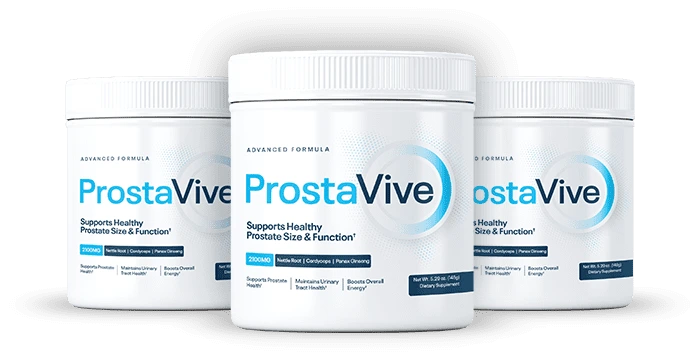
What a nettle-led prostate formula looks like on the label
We go through the ingredient list, the blend total, what the label prints and what it leaves out, the refund terms, and how each ingredient compares with the amount used in published research.
Read the full ProstaVive review, label and dosesHow long before you know if something is working?
Longer than a single month. Every trial that produced a measurable result ran for months, and the shortest useful window is about eight weeks.
Look at the durations. Beta-sitosterol trials ran 4 to 26 weeks. Pygeum studies averaged 64 days. The nettle root trial ran a full six months before its final numbers were read.678 Judging any of them on 30 days is judging them on a fraction of the time the researchers needed.
CAMUS shows the second problem with short self-assessment: the placebo group's symptom score improved by 2.99 points on its own.4 Symptoms fluctuate, and paying attention alone makes people report improvement. That is why you need a baseline number and a fixed re-scoring schedule rather than a feeling.
We break the week-by-week picture down in our guide to how long prostate supplements take to work, including what tends to shift first and how to tell a real change from normal variation.
What should I plan for before I start?
Six practical decisions, made before you spend anything, that determine whether you end up with an answer or just a used tub.
- Take your baseline today. Score the seven questions above and write the total and the date on your phone. Without it you are guessing in eight weeks.
- Plan a 90-day run, not a 30-day try. The research timelines make a one-month test close to meaningless.
- Check that the refund window covers your run. A guarantee that expires before your trial period does is not much of a guarantee. Read the terms at checkout, not the headline.
- Show the ingredient list to a pharmacist if you take a daily prescription. Plant extracts are not inert, and some interact with blood thinners and blood-pressure medication.
- Change one thing at a time. Starting a supplement, a new exercise routine and a caffeine cut in the same week teaches you nothing about any of them.
- Set the right target. The measured outcomes across this research are urinary flow, emptying and symptom scores. None of these ingredients was shown to make the gland smaller, and any product sold on that promise is overreaching.
For side-by-side breakdowns of the individual formulas in this category, including what each label prints and what it leaves out, see our men's health supplement reviews.
Frequently asked questions
Is an enlarged prostate after 45 normal?
Common, yes. NIDDK reports that benign prostatic hyperplasia affects 5% to 6% of men ages 40 to 64, rising to 29% to 33% of men 65 and older. Prostate growth itself is ordinary ageing biology. Whether it causes symptoms varies a lot from man to man, and gland size does not predict symptom severity reliably.
Does an enlarged prostate turn into prostate cancer?
No. Cleveland Clinic states that research shows having BPH does not increase your risk of developing prostate cancer. The two are separate conditions. The one thing to plan for is that they share symptoms, so a man with BPH can have undetected prostate cancer at the same time. That is why a weak stream or repeated night waking is worth having checked by a doctor rather than filed under ageing, and why anything you take for flow and comfort sits alongside that check rather than in place of it.
Can a supplement make an enlarged prostate go away?
No, and be wary of anything sold on that claim. The outcomes measured in these trials are urinary flow, residual bladder volume and symptom scores. The Cochrane review of beta-sitosterol was explicit that it did not make the gland any smaller, while it did improve flow and symptoms. Flow and comfort are the honest target.
How do I score my urinary symptoms at home?
Answer the seven International Prostate Symptom Score questions covering incomplete emptying, frequency, intermittency, urgency, weak stream, hesitancy and nocturia. Each scores 0 to 5, so the total runs 0 to 35. Under 8 is mild, 8 to 19 is moderate and 20 to 35 is severe. Record the number and the date so you can compare later.
Does exercise actually help urinary symptoms?
The pooled evidence says active men report fewer of these symptoms. Parsons and Kashefi analysed 11 studies covering 43,083 men in European Urology and found odds ratios of 0.74 for both moderate and heavy activity compared with sedentary men. These were observational studies, so they show a consistent association rather than proof of cause, but it is the strongest lifestyle signal in this area.
Which plant extract has the strongest human data?
For flow measures, beta-sitosterol, with four randomised trials in 519 men showing a 4.9 point symptom-score difference and a 3.91 mL per second gain in peak flow. For trial length and size, nettle root, with a six-month randomised trial in 620 men. Saw palmetto taken on its own is the outlier: it showed little to no benefit in the 2023 Cochrane review and in the CAMUS trial.
Sources
- National Institute of Diabetes and Digestive and Kidney Diseases (NIH). Prostate Enlargement (Benign Prostatic Hyperplasia). Prevalence by age, symptom list and self-care guidance. niddk.nih.gov
- Barry MJ, Fowler FJ Jr, O'Leary MP, Bruskewitz RC, Holtgrewe HL, Mebust WK, Cockett AT. The American Urological Association symptom index for benign prostatic hyperplasia. Journal of Urology. 1992 Nov;148(5):1549-57. Seven questions; validated in 210 patients and 108 controls; mean score fell from 17.6 to 7.1 after surgery. pubmed.ncbi.nlm.nih.gov/1279218
- Franco JVA, Trivisonno L, Sgarbossa NJ, Alvez GA, Fieiras C, Escobar Liquitay CM, Jung JH. Serenoa repens for the treatment of lower urinary tract symptoms due to benign prostatic enlargement. Cochrane Database of Systematic Reviews. 2023 Jun 22;6(6):CD001423. 27 studies, 4,656 participants. IPSS range 0 to 35; moderate band 8 to 19. Mean difference 0.90 points for Serenoa repens alone; 2.41 points for combinations with other phytotherapy, low certainty. pubmed.ncbi.nlm.nih.gov/37345871
- Barry MJ, Meleth S, Lee JY, et al; CAMUS Study Group. Effect of increasing doses of saw palmetto extract on lower urinary tract symptoms: a randomized trial. JAMA. 2011 Sep 28;306(12):1344-51. 369 men aged 45 and over with symptom scores of 8 to 24, up to three times the 320 mg daily dose, 72 weeks. pubmed.ncbi.nlm.nih.gov/21954478
- Parsons JK, Kashefi C. Physical activity, benign prostatic hyperplasia, and lower urinary tract symptoms. European Urology. 2008 Jun;53(6):1228-35. 11 studies, 43,083 men; pooled odds ratios versus sedentary of 0.70 (light), 0.74 (moderate) and 0.74 (heavy). pubmed.ncbi.nlm.nih.gov/18358592
- Wilt T, Ishani A, MacDonald R, Stark G, Mulrow C, Lau J. Beta-sitosterols for benign prostatic hyperplasia. Cochrane Database of Systematic Reviews. 2000;1999(2):CD001043. 519 men, 4 randomised placebo-controlled trials lasting 4 to 26 weeks; symptom score difference 4.9 points; peak flow +3.91 mL/s; residual volume 28.62 mL; doses 60 to 130 mg per day; no change in gland size. pubmed.ncbi.nlm.nih.gov/10796740
- Wilt T, Ishani A, Mac Donald R, Rutks I, Stark G. Pygeum africanum for benign prostatic hyperplasia. Cochrane Database of Systematic Reviews. 2002;1998(1):CD001044. 18 randomised trials, 1,562 men, mean duration 64 days; nocturia reduced 19%, residual volume 24%, peak flow increased 23%; doses 75 to 200 mg per day. pubmed.ncbi.nlm.nih.gov/11869585
- Safarinejad MR. Urtica dioica for treatment of benign prostatic hyperplasia: a prospective, randomized, double-blind, placebo-controlled, crossover study. Journal of Herbal Pharmacotherapy. 2005;5(4):1-11. 620 men, six months; symptom score 19.8 to 11.8 versus 19.2 to 17.7 on placebo; peak flow +8.2 mL/s versus +3.4 mL/s. pubmed.ncbi.nlm.nih.gov/16635963
- Cleveland Clinic. Benign Prostatic Hyperplasia (BPH). Relationship between BPH and prostate cancer risk, and prevalence by age. my.clevelandclinic.org

About the author: Ray Delgado
I'm Ray Delgado. I hit my mid-forties, started paying attention to the health questions men my age actually ask, and went looking for straight answers. The clearest ones were sitting in the research, so I started reading the actual studies, and then writing this: plain-English breakdowns of what the research shows on prostate and men's health supplements, what the labels leave out, and what is worth paying for. No fear-mongering, no miracle cures.
Not medical advice. I am not a doctor, urologist or pharmacist. Updated 22 September 2026. This article contains links to our review pages, which carry affiliate links.
Affiliate disclosure: some links on this site are affiliate links. If you buy through one of our review pages we may earn a commission, at no additional cost to you. This does not affect what we write or which studies we cite. This article is general information, not medical advice, and it is not a diagnosis. Statements about dietary supplements have not been evaluated by the Food and Drug Administration, and supplements are not intended to diagnose, treat, cure or prevent any disease. Talk to a doctor before starting a supplement, especially if you take medication or have a health condition, and get any urinary or prostate symptom assessed in person.