Men's health · Ingredient evidence
Which Prostate Supplement Ingredients Have Real Clinical Evidence Behind Them?
Five ingredients, judged only on published randomised trials: how many men were studied, what actually changed, what dose the researchers used, and what the label on the tub does not tell you.
Four ingredients carry real human trial data: beta-sitosterol, pygeum, nettle root and, as a supporting mineral, zinc. The measured outcomes are urinary flow and symptom scores, not gland size. Saw palmetto tested alone came up short in the largest trials, which is why the better formulas do not lean on it.
Before you read on
I am not a doctor, urologist or pharmacist. I write from published research. See your own doctor before you start or stop any supplement, and get any urinary or prostate symptom checked in person.
Some links on this site are affiliate links. If you buy through one of our review pages we may earn a commission, at no extra cost to you. It does not change what the studies say or what we write here.
Why is it so hard to tell which ingredients are real?
Because a product page can cite genuine research that was never done on that product. The study is real, the ingredient is real, and the link between the two is doing a lot of quiet work.
Three specific gaps open up between a published trial and a tub on a shelf.
- The trial tested the ingredient, not the finished formula. That is normal in this category and it is not a scandal, but it means the honest claim is always "this ingredient was studied and produced this result", never "this product produces this result".
- The extract may not match. Nettle root and nettle leaf are different. A standardised extract and a raw powder are different. Trials are run on specific preparations, and the label does not always tell you which one is in the tub.
- Blend totals hide the split. Many formulas print one combined milligram figure rather than a line for each ingredient, so you can see the size of the blend but not how it was divided.
The filter I use is simple. Was there a randomised, placebo-controlled trial in humans? Did it use a validated urinary symptom score? And did it measure flow and symptoms, which is what men feel, rather than gland dimensions, which they do not? Five ingredients are worth judging on that basis. Here is how each one does.
What does the research say about beta-sitosterol?
It has the cleanest flow data of any plant compound in this category, from four randomised placebo-controlled trials pooled by Cochrane.
Wilt and colleagues pooled four double-blind, placebo-controlled trials covering 519 men, running 4 to 26 weeks. The weighted mean difference on the urinary symptom score was 4.9 points in favour of beta-sitosterol. Peak urine flow improved by 3.91 mL per second, and the volume left in the bladder after urinating fell by 28.62 mL. Withdrawal rates were 7.8 percent on beta-sitosterol against 8.0 percent on placebo, so it was tolerated about as well as a dummy pill.1
The daily amounts in those trials ranged from 60 mg to 130 mg.1 That range matters later, because it is small enough to fit comfortably inside a combination formula.
The review is also straightforward about the limits. Beta-sitosterol did not make the gland any smaller, and its long-term effectiveness and safety were not established. That is the right way round for a supplement: it supports normal urinary flow and emptying without pretending to reverse the anatomy.
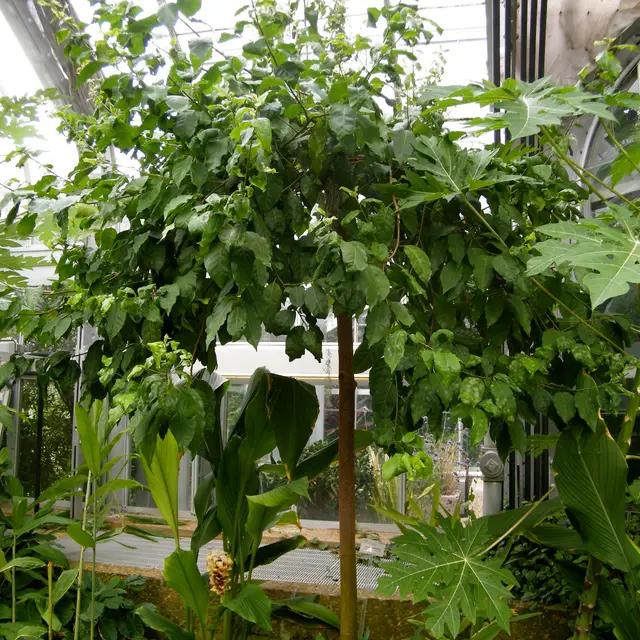
What about pygeum?
Pygeum has the largest number of trials and the most specific finding on night-time trips, recorded in studies that were mostly short.
A second Cochrane review, again led by Wilt, analysed 18 randomised controlled trials covering 1,562 men. Nocturia was reduced by 19 percent, residual urine volume by 24 percent, and peak urine flow rose by 23 percent. Men taking pygeum were more than twice as likely to report an overall improvement than men on placebo, a relative risk of 2.1. Side effects were mild and comparable to placebo, with a 12 percent overall dropout rate.2
Doses ran from 75 mg to 200 mg per day across the trials, with 100 mg a day the most common.2
The reviewers were candid: the studies were small, averaged 64 days, used varied preparations and rarely reported standardised outcome measures. Read pygeum as a consistent short-term signal rather than a closed case.
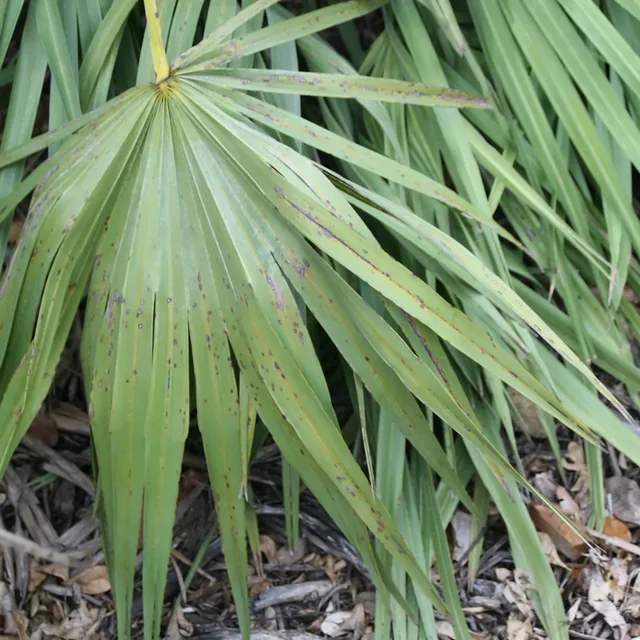
Where does saw palmetto actually stand?
Tested on its own, at standard and at triple doses, it did not beat placebo. That is a finding about the single-ingredient approach, and it is the most useful thing in this whole article.
The CAMUS trial, published by Barry and colleagues in JAMA in 2011, gave 369 men aged 45 and over up to three times the standard 320 mg daily dose for 72 weeks. Symptom scores fell 2.20 points on saw palmetto and 2.99 points on placebo, a difference of 0.79 points favouring placebo, and saw palmetto beat placebo on no secondary outcome. No adverse effects were clearly attributable to it.3
The 2023 Cochrane update by Franco and colleagues pulled together 27 studies and 4,656 men and concluded that "Serenoa repens alone provides little to no benefits for men with lower urinary tract symptoms due to benign prostatic enlargement".4
Now read the rest of that same review. Nineteen of its studies tested saw palmetto by itself and found a mean difference of 0.90 points. Eight tested it as part of a combination with other plant extracts, and those showed a mean difference of 2.41 points. The authors were careful to grade the combination evidence as low certainty and to say there is "more uncertainty" about combinations rather than declaring them settled.4
So the collapse in the saw palmetto data is specifically a collapse of one berry extract asked to carry the whole job alone. That is why a serious formula does not lean on saw palmetto as its lead ingredient, and why the formulas worth your attention are built around something with its own trial data.
Do zinc, nettle and the supporting ingredients belong in a prostate formula?
Nettle root earns its place on the strength of the longest trial in the category. Zinc earns a supporting place, and pumpkin seed oil now has a head-to-head trial of its own. The vitality herbs are a bonus rather than the engine, and it is worth knowing which is which.
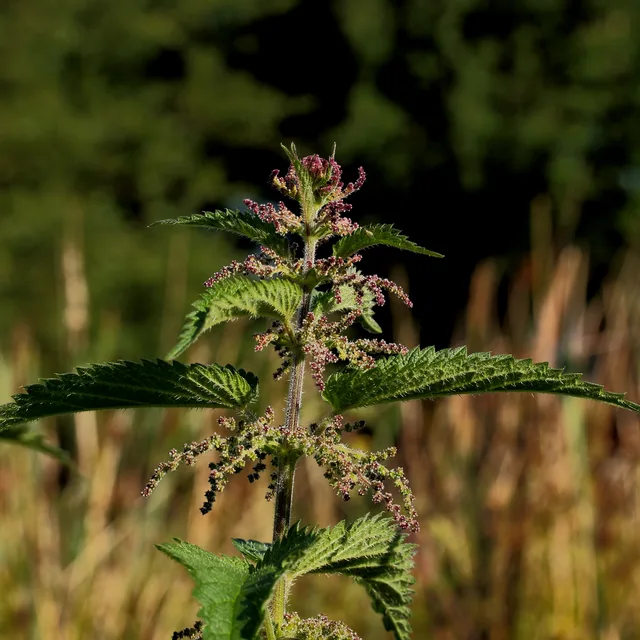
Nettle root
The largest and longest single trial of any of these ingredients came from Safarinejad in the Journal of Herbal Pharmacotherapy in 2005: a six-month, double-blind, placebo-controlled randomised study in 620 men, 558 of whom completed it. Symptom scores fell from 19.8 to 11.8 on nettle root against 19.2 to 17.7 on placebo. Peak flow improved by 8.2 mL per second versus 3.4 mL per second on placebo, and residual volume dropped from 73 mL to 36 mL.5
Six months and 620 men is a stronger footing than any single saw palmetto trial gave that ingredient. Note the plant part: it is nettle root that was studied here, not nettle leaf.
Zinc
Zinc is an essential mineral and a reasonable inclusion in a men's formula at everyday amounts. Being straight about it: no randomised trial has established a zinc dose for urinary symptoms, so it belongs in the supporting cast rather than as the reason you choose a product. Zinc taken at high amounts over long periods can interfere with copper, which is a good argument for staying at the labelled serving rather than doubling up.
Pumpkin seed oil
Pumpkin seed oil (Cucurbita pepo) has a newer trial with an unusual design: instead of a placebo, it was measured against tamsulosin, a standard prescription drug for urinary symptoms. Zerafatjou and colleagues, writing in BMC Urology in 2021, randomised 73 men aged 50 and over to 360 mg of pumpkin seed oil twice a day or 0.4 mg of tamsulosin at bedtime, for three months.6
Symptom scores fell and quality of life improved significantly in both groups. The drug moved the score further from the starting point, while from month one to month three the two groups improved at a similar pace. Nobody in the pumpkin seed group reported a side effect, whereas the tamsulosin group reported dizziness, headache and retrograde ejaculation.6 The authors ask for further studies, so read it as a promising, well-tolerated supporting ingredient, and never as a swap for anything your doctor has prescribed.
The vitality herbs
Tongkat ali, maca, boron, ginseng, ashwagandha and cordyceps show up in a lot of prostate formulas. They are studied for energy, stress and testosterone rather than urinary flow. If you want both things from one daily scoop, that is a genuine convenience. Just be clear when you read a label that these are not the ingredients doing the urinary work, so the formula should still lead with one that is.
What dose do you actually need, and does the label tell you?
The research doses are modest, in the tens to low hundreds of milligrams. Whether you can check them against the tub depends on how the brand prints its label.
| Ingredient | Amount used in the research | What the trials measured |
|---|---|---|
| Beta-sitosterol | 60 to 130 mg per day1 | Symptom score 4.9 points, peak flow +3.91 mL/s, residual volume 28.62 mL |
| Pygeum | 75 to 200 mg per day, most often 100 mg2 | Nocturia 19%, peak flow +23%, residual volume 24% |
| Nettle root | Standardised root extract, six-month trial5 | Symptom score 19.8 to 11.8, peak flow +8.2 mL/s |
| Saw palmetto | 320 mg per day, and up to 960 mg in CAMUS3 | No advantage over placebo when given alone |
| Pumpkin seed oil | 360 mg twice a day, three months6 | Symptom score and quality of life improved, compared against tamsulosin rather than placebo |
| Zinc | No trial dose established for urinary symptoms | Not tested on its own for these symptoms |
Two practical points come out of that table. The useful amounts are small, so a blend of a couple of thousand milligrams has plenty of room to hold a meaningful dose of the ingredient that leads it. And most brands in this category print a blend total rather than a line-by-line split, which is standard commercial practice rather than a red flag on its own.
What it does mean is that you judge a formula on which ingredient leads it, on the size of the blend, and on how long the refund window runs, rather than on arithmetic you cannot perform. Our full ProstaVive review works through exactly that: the 2100 mg blend, the nettle root that leads it, what the label prints and what it leaves out, and the refund terms. It is a useful worked example because it is nettle-led rather than saw-palmetto-led, which is the distinction the trial data above makes.
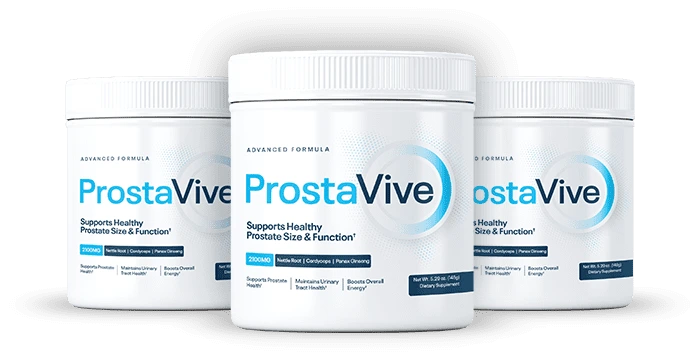
A nettle-led blend, read line by line
What the label prints, what it does not, how the blend size compares with the study amounts above, and the refund window you get to judge it in.
Read the full ProstaVive review, label and dosesWhat would I want on a label if I were choosing today?
Six things, in order of how much they would move my decision.
- A lead ingredient with its own human trial data. Nettle root or beta-sitosterol at the front of the list, rather than saw palmetto carrying the product alone.
- The plant part named. Nettle root, not just "nettle". The trial was run on the root.
- A blend large enough to be plausible. The research amounts are modest, so a blend in the thousands of milligrams comfortably has the room.
- Claims about flow and comfort, not anatomy. Anything promising a smaller gland is claiming more than the research supports.
- A refund window that outlasts a 90-day run. The trials took months. A 30-day guarantee cannot cover a fair test.
- A payment processor with a real refund route, so getting your money back does not depend on a brand answering email.
If you want the wider context first, including how to score your own symptoms before you start anything, read our guide to what the evidence shows about an enlarged prostate after 45. For side-by-side breakdowns of the individual products, see our men's health supplement reviews.
Frequently asked questions
Do these ingredients shrink the prostate?
No. The Cochrane review of beta-sitosterol stated plainly that it did not make the gland any smaller, even while it improved urinary symptom scores and peak flow. Every ingredient here was measured on flow, bladder emptying and symptom scores. Treat any product sold on a promise about gland size as claiming more than the research supports.
Which single ingredient has the strongest evidence?
It depends what you weigh. Beta-sitosterol has the cleanest pooled flow data, with four randomised trials in 519 men showing a 4.9 point symptom-score difference and a 3.91 mL per second gain in peak flow. Nettle root has the single longest and largest trial, six months in 620 men. Pygeum has the most trials, 18 covering 1,562 men, but they averaged only 64 days.
Is saw palmetto worth taking on its own?
The evidence for it as a standalone is weak. CAMUS gave 369 men up to triple the standard dose for 72 weeks and it did not beat placebo, and the 2023 Cochrane review of 27 studies and 4,656 men concluded it provides little to no benefit alone. The same review found a larger effect in studies where it was combined with other plant extracts, though it graded that evidence low certainty. The sensible reading is to pick a formula led by an ingredient with its own trial data.
Does a proprietary blend mean the doses are too low?
Not by itself. It means the split is not printed, which is standard practice across this category. The research amounts are modest, from 60 mg to around 200 mg a day for the main ingredients, so a blend of a couple of thousand milligrams has ample room to dose the lead ingredient properly. Since you cannot verify it on the label, weight your decision toward which ingredient leads the blend and how long the money-back window runs.
Sources
- Wilt T, Ishani A, MacDonald R, Stark G, Mulrow C, Lau J. Beta-sitosterols for benign prostatic hyperplasia. Cochrane Database of Systematic Reviews. 2000;1999(2):CD001043. 519 men, 4 randomised placebo-controlled trials lasting 4 to 26 weeks; symptom score difference 4.9 points; peak flow +3.91 mL/s; residual volume 28.62 mL; doses 60 to 130 mg per day; no change in gland size. pubmed.ncbi.nlm.nih.gov/10796740
- Wilt T, Ishani A, Mac Donald R, Rutks I, Stark G. Pygeum africanum for benign prostatic hyperplasia. Cochrane Database of Systematic Reviews. 2002;1998(1):CD001044. 18 randomised trials, 1,562 men, mean duration 64 days; nocturia reduced 19%, residual volume 24%, peak flow increased 23%; relative risk of overall improvement 2.1; doses 75 to 200 mg per day. pubmed.ncbi.nlm.nih.gov/11869585
- Barry MJ, Meleth S, Lee JY, et al; CAMUS Study Group. Effect of increasing doses of saw palmetto extract on lower urinary tract symptoms: a randomized trial. JAMA. 2011 Sep 28;306(12):1344-51. 369 men aged 45 and over, doses up to three times the standard 320 mg per day, 72 weeks; symptom score fell 2.20 points versus 2.99 on placebo. pubmed.ncbi.nlm.nih.gov/21954478
- Franco JVA, Trivisonno L, Sgarbossa NJ, Alvez GA, Fieiras C, Escobar Liquitay CM, Jung JH. Serenoa repens for the treatment of lower urinary tract symptoms due to benign prostatic enlargement. Cochrane Database of Systematic Reviews. 2023 Jun 22;6(6):CD001423. 27 studies, 4,656 participants; mean difference 0.90 points for Serenoa repens alone, 2.41 points for combinations with other phytotherapy, graded low certainty. pubmed.ncbi.nlm.nih.gov/37345871
- Safarinejad MR. Urtica dioica for treatment of benign prostatic hyperplasia: a prospective, randomized, double-blind, placebo-controlled, crossover study. Journal of Herbal Pharmacotherapy. 2005;5(4):1-11. 620 men, six months; symptom score 19.8 to 11.8 versus 19.2 to 17.7 on placebo; peak flow +8.2 mL/s versus +3.4 mL/s; residual volume 73 mL to 36 mL. pubmed.ncbi.nlm.nih.gov/16635963
- Zerafatjou N, Amirzargar M, Biglarkhani M, Shobeirian F, Zoghi G. Pumpkin seed oil (Cucurbita pepo) versus tamsulosin for benign prostatic hyperplasia symptom relief: a single-blind randomized clinical trial. BMC Urology. 2021;21(1):147. 73 men aged 50 and over, three months; 360 mg pumpkin seed oil twice a day versus 0.4 mg tamsulosin at bedtime; symptom score and quality of life improved significantly in both groups; no side effects in the pumpkin seed oil group. pubmed.ncbi.nlm.nih.gov/34666728
Image credits. Saw palmetto (Serenoa repens) photo by David J. Stang, CC BY-SA 4.0. Stinging nettle (Urtica dioica) photo by Dominicus Johannes Bergsma, CC BY-SA 4.0. African cherry (Prunus africana) photo by Sarah Stierch, CC BY 4.0. All via Wikimedia Commons.

About the author: Ray Delgado
I'm Ray Delgado. I hit my mid-forties, started paying attention to the health questions men my age actually ask, and went looking for straight answers. The clearest ones were sitting in the research, so I started reading the actual studies, and then writing this: plain-English breakdowns of what the research shows on prostate and men's health supplements, what the labels leave out, and what is worth paying for. No fear-mongering, no miracle cures.
Not medical advice. I am not a doctor, urologist or pharmacist. Updated 24 September 2026. This article contains links to our review pages, which carry affiliate links.
Affiliate disclosure: some links on this site are affiliate links. If you buy through one of our review pages we may earn a commission, at no additional cost to you. This does not affect what we write or which studies we cite. This article is general information, not medical advice, and it is not a diagnosis. Statements about dietary supplements have not been evaluated by the Food and Drug Administration, and supplements are not intended to diagnose, treat, cure or prevent any disease. Talk to a doctor before starting a supplement, especially if you take medication or have a health condition, and get any urinary or prostate symptom assessed in person.