Weight and metabolism · Label guide
What Do Metabolism Support Pills Actually Do? A Label-Reading Guide
Every bottle on this shelf says metabolism on the front. The panel on the back says what is in the capsule. Here is how to read one, line by line, on a real label.
Metabolism support pills do not replace your metabolism or override diet and activity. Most pair a nutrient with an authorised role, such as chromium for normal blood glucose levels, with plant extracts studied for modest effects on energy use or body composition. What a given pill does depends on what its label prints, and in what amounts.
Read this first
This guide is about reading labels. It does not diagnose anything, and I am not a nutritionist, dietitian or doctor. If you take prescription medication, or have a blood sugar or thyroid condition, show any label to your pharmacist or GP before you start a new supplement.
One link near the end of this page goes to a store that pays us a commission if you buy, at no extra cost to you. The label used as the worked example belongs to a product we have reviewed; the reading method works on any bottle.
What do metabolism support pills actually do?
They do three different jobs, and most bottles mix all three. Knowing which line on the label does which job is the skill this guide teaches.
- A nutrient with an authorised role. Some vitamins and minerals carry wording that regulators approved after reviewing the evidence. Chromium is one example. The Great Britain nutrition and health claims register lists two statements for it: chromium "contributes to normal macronutrient metabolism" and "contributes to the maintenance of normal blood glucose levels".1
- Plant extracts with human research on energy use. Green tea extract belongs here.
- Plant compounds with human research on body composition. Berberine belongs here.
Green tea extract and berberine both have randomised human trials behind them. Those studies used amounts chosen by the researchers, so they describe the ingredient rather than any one capsule. We set out each trial, with its numbers, in our guide to which metabolism support ingredients have real clinical evidence. Here the job is the label itself.
Can pills speed up your metabolism?
Yes, through specific ingredients, and they work alongside diet, movement and sleep.
Green tea extract is the clearest case, and the ingredient guide above shows the respiration-chamber studies behind it. A capsule does the most inside a routine that already looks after muscle, daily movement and sleep. Our guide to why metabolism seems to slow down after 40 walks through that routine.
How do you read a metabolism supplement label?
Six reads, in the same order every time. I start at the top of the panel, work down, and only look at the front of the bottle at the end.
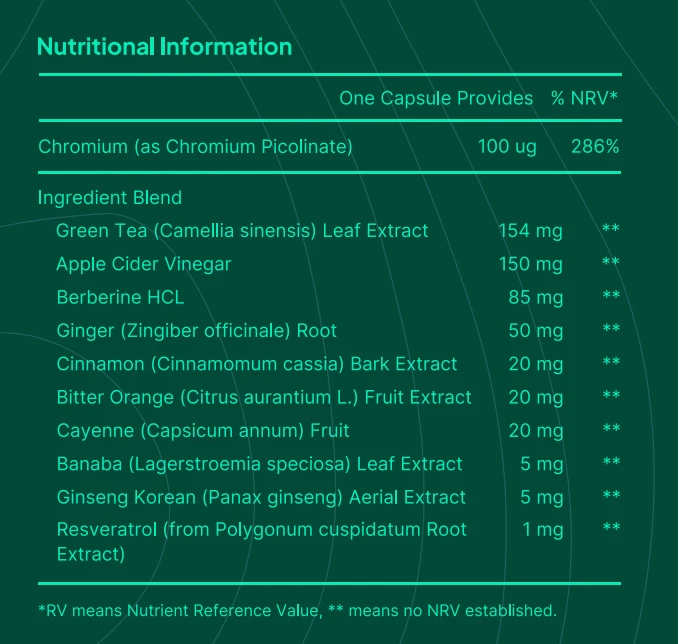
The panel below is our worked example. It comes from Corevalin, a once-a-morning capsule aimed at adults over 40, and it is a clean one to learn on because every amount is printed. Our full review of that capsule, with its score and refund terms, judges the formula; here we only read it.
1. Find the serving line
"One Capsule Provides" tells you every number under it is per capsule. Then check the directions for how many capsules a day. Here it is one, with breakfast, so the column is also the daily amount.
On a product taken two or three times a day, multiply first.
2. Split the nutrients from the botanicals
Nutrients come first and carry a figure in the reference column: %NRV on UK and EU labels, %DV on US ones. Plant extracts follow, usually under a blend heading, with a double asterisk that the footnote explains as "no NRV established".
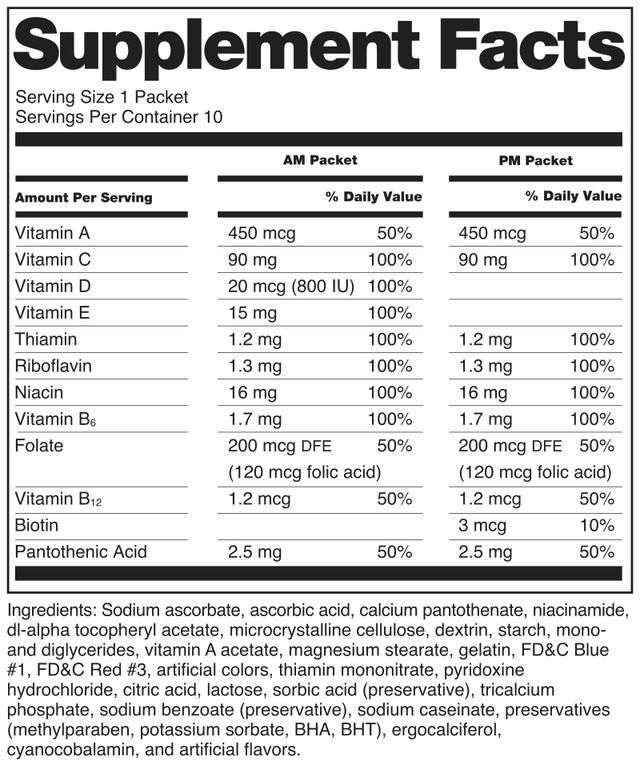
That asterisk is normal. Reference values exist for vitamins and minerals, so a botanical never has one. US panels are laid out the same way under a Supplement Facts heading.
3. Read the brackets
"Chromium (as chromium picolinate)" names the nutrient and the form it comes in. US labelling rules use the same "as" and "from" convention for source ingredients.2
The number beside it, 100 micrograms, is the chromium itself. The US National Institutes of Health explains that labels declare elemental chromium, and that chromium is 12.4 percent of the weight of chromium picolinate.3 "Berberine HCl" is the hydrochloride form of berberine, and "resveratrol (from Polygonum cuspidatum root extract)" names the plant it came from.
4. Check that every amount is printed
Under US rules, a maker can group ingredients as a "proprietary blend" and print only the blend's total weight, with the ingredients listed in descending order of weight.2 You learn the order, not the amounts.
The example panel prints a figure for each of the ten plant ingredients, from 154 mg of green tea leaf extract down to 1 mg of resveratrol. The order still tells you something: green tea, apple cider vinegar and berberine make up the core of the blend by weight.
| Line on the label | Per capsule | What sits behind it |
|---|---|---|
| Chromium (as chromium picolinate) | 100 mcg | Authorised nutrient role: normal macronutrient metabolism and normal blood glucose levels1 |
| Green tea leaf extract | 154 mg | Human research on energy use, covered in the ingredient guide |
| Apple cider vinegar | 150 mg | Traditional use |
| Berberine HCl | 85 mg | Human research, covered in the ingredient guide |
| Ginger root | 50 mg | Traditional use |
| Cinnamon (Cinnamomum cassia) bark extract | 20 mg | Traditional use |
| Bitter orange fruit extract | 20 mg | Traditional use |
| Cayenne fruit | 20 mg | Traditional use |
| Banaba leaf extract | 5 mg | Traditional use |
| Korean ginseng aerial extract | 5 mg | Traditional use |
| Resveratrol (from Polygonum cuspidatum root extract) | 1 mg | As printed on the label |
5. Read the claim words
Claim wording on a supplement is chosen with care, and it tells you a lot. "Contributes to the maintenance of normal blood glucose levels" is an authorised phrase for chromium in Great Britain, so beside chromium you are reading wording a regulator has approved.1 Wording beside a plant ingredient describes the role it plays in the formula.
On US labels you will also see a set sentence next to any structure or function statement: "This statement has not been evaluated by the Food and Drug Administration. This product is not intended to diagnose, treat, cure, or prevent any disease."4 It is required wording, and finding it is a good sign the seller is following the rules.
The habit worth keeping is simple: read the whole label before you buy. A panel that prints every line gives you everything you need to decide.
6. Finish with directions, warnings and terms
For the example product the directions are one capsule with breakfast. Its green tea contains caffeine, which is one reason a morning dose suits it, and our review advises skipping it if you are under 18, pregnant or breastfeeding.
If you take prescription medication, this is the part to show a pharmacist. Chromium can add to the effect of blood sugar medicines, and berberine is worth mentioning to your pharmacist too.
Then find the refund terms on the seller's site. A guarantee that runs from delivery and covers sealed bottles means you open one bottle and keep the rest sealed until you know.
Which metabolism pills are worth a closer look?
The ones you can read, sold by a seller whose refund terms are clear. Four things to look for:
- Every ingredient amount printed, not only a blend total.
- A nutrient with authorised wording, such as chromium, named with its form.
- Directions you will keep to, ideally one serving a day, with warnings you can read before you buy.
- A money-back guarantee whose terms you can read before you pay.
The example prints every amount, names chromium with its form, asks for one capsule a day, and its store sets out the refund terms. That is a large part of why the formula scored 4.3 out of 5 when we reviewed it.
From the serving line down, now on the brand's store
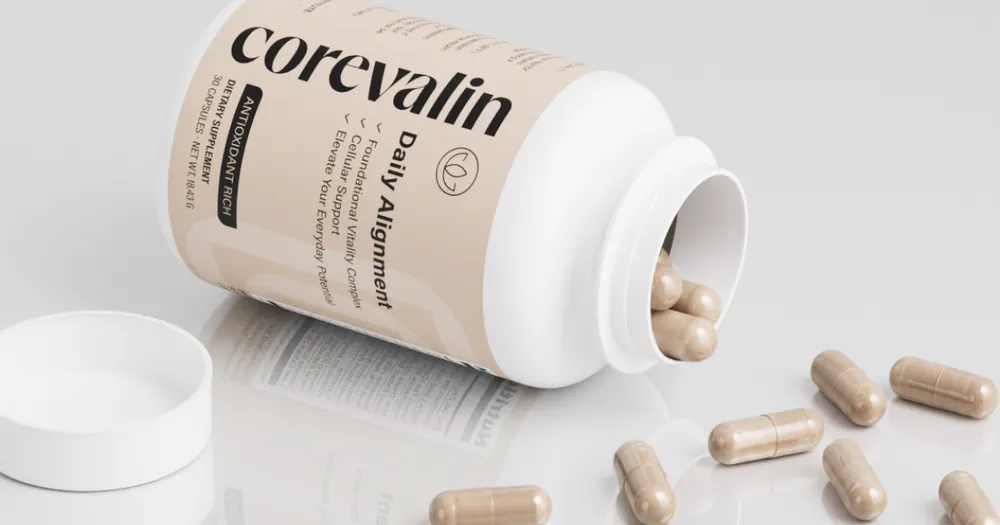
You have read Corevalin's panel top to bottom: chromium as picolinate at 100 micrograms, then a blend headed by green tea leaf extract at 154 mg. The order page shows that same ingredients window before you pay, and unopened bottles can be returned within 30 days of delivery.
See the current price on the brand's storeHow do you give a new capsule a fair trial?
Four small decisions turn a bottle into a fair test.
- Open one bottle at a time. Keep the rest sealed, so a guarantee that covers unopened bottles still covers them.
- Fix the time. One capsule with breakfast is the easiest habit to keep, and steady daily use is what you are judging.
- Note how you feel and your routine before day one. A few lines about your energy through the afternoon and what breakfast looks like give you something to compare against.
- Decide inside the guarantee window. Use the first bottle every day from the day it arrives, and make your call before the 30 days from delivery run out. Keep the other bottles sealed until you have decided.
Frequently asked questions
Do metabolism pills work?
The better ones do what their ingredients have been shown to do. Chromium carries authorised wording for normal macronutrient metabolism and normal blood glucose levels, and green tea extract and berberine have randomised human trials behind them. They work alongside diet, movement and sleep, and a fully printed label shows you exactly what you are getting.
What does NRV mean on a supplement label?
NRV stands for Nutrient Reference Value, the reference amount used on UK and EU labels, and the %NRV column shows how a nutrient compares with it. Plant extracts have no reference value, which is why they carry an asterisk pointing to a footnote that says no NRV is established. US labels use %DV, the Daily Value, in the same way.
What is a proprietary blend on a supplement label?
Under US labelling rules, a proprietary blend lets a maker print only the total weight of a group of ingredients, listed in descending order of weight, without the amount of each one. A label that prints every amount instead lets you see exactly what each capsule contains.
Are metabolism supplements safe with medication?
Check with a pharmacist first if you take a daily prescription. Chromium can add to the effect of blood sugar medicines, and berberine is worth mentioning to your pharmacist too. Green tea extract contains caffeine. Showing the full label makes that conversation quick.
Sources
- Department of Health and Social Care. Great Britain nutrition and health claims (NHC) register, spreadsheet version of 19 May 2026. Authorised health claims for chromium: "Chromium contributes to normal macronutrient metabolism" and "Chromium contributes to the maintenance of normal blood glucose levels". gov.uk
- US Code of Federal Regulations, 21 CFR 101.36, nutrition labeling of dietary supplements. Paragraph (c): proprietary blend ingredients declared in descending order of predominance by weight, with the total weight of the blend; paragraph (d): source ingredients identified with "as" or "from". ecfr.gov
- National Institutes of Health, Office of Dietary Supplements. Chromium: fact sheet for health professionals, updated 2 June 2022. Supplement Facts labels declare elemental chromium; elemental chromium accounts for 12.4% of the weight of chromium picolinate. ods.od.nih.gov
- US Code of Federal Regulations, 21 CFR 101.93(c), the disclaimer required beside structure and function statements on dietary supplements. ecfr.gov
Image credits. Nutritional information panel and product photo from the brand's materials. FDA sample Supplement Facts label, public domain, via Wikimedia Commons.

About the author: Diane Marsh
I'm Diane Marsh. Ray and I have been an active couple for more than 15 years, and after 40 we both noticed our bodies no longer responded the way they used to. For me it was my metabolism: what had always kept my weight steady stopped working, and that was frustrating. I went to the research on sustainable weight management, hormonal balance and our relationship with food, and I write for anyone who feels their body has changed. The products I write about are ones I choose and buy myself, the way any reader would.
Not a professional qualification. I am not a nutritionist, dietitian or doctor, and nothing here is medical or dietary advice. Updated 18 October 2026.
Affiliate disclosure: one link on this page is an affiliate link. If you buy through it we may earn a commission, at no additional cost to you; it does not change the studies cited or how the label is read. This article is general information, not medical or dietary advice, and not a diagnosis. Statements about dietary supplements have not been evaluated by the Food and Drug Administration, and supplements are not intended to diagnose, treat, cure or prevent any disease. Talk to a doctor or pharmacist before starting a supplement, especially if you take medication or have a health condition.