Energy and sleep · Pillar guide
Why Am I Tired All the Time After 40? What Actually Helps
You are not lazy and you are not imagining it. Four ordinary things are worth checking first, and each one has published research attached to it. Here is what was measured, what it means for your week, and where to start.
Tiredness after 40 is often linked to ordinary habits, and four of them are worth checking first: how long you sleep, how much daylight you get, how much you move, and how your evening ends. Change them one at a time rather than all at once. Results vary, and tiredness that persists deserves a medical check.
Before you read on
I am not a doctor, and this guide is general information rather than medical advice. Tiredness that keeps going, or that is getting worse, needs a real appointment, because some of the causes need treatment rather than a better bedtime. Talk to your own doctor before you change anything if you take medication or have a health condition.
Why am I tired all the time after 40?
Four ordinary things are worth checking first: sleep length, daylight exposure, daily movement, and the way the last hour of the evening is spent.
None of those four is dramatic on its own. Each of them is something you can check this week, and each one has published research attached to it.
The rest of this guide takes the four one at a time, names the study behind each one, and says plainly how big or small that study was. Where the research is thin, you will see it called thin.
One warning belongs at the top rather than buried at the bottom. The Mayo Clinic notes that fatigue is most often linked to habits such as poor sleep and too little exercise, but that it is sometimes a symptom of a condition that needs treatment, including anaemia, a thyroid problem, sleep apnoea, depression or a medication you are already taking.12 If your tiredness is persistent or worsening, book the appointment first and treat this guide as what you do alongside it.
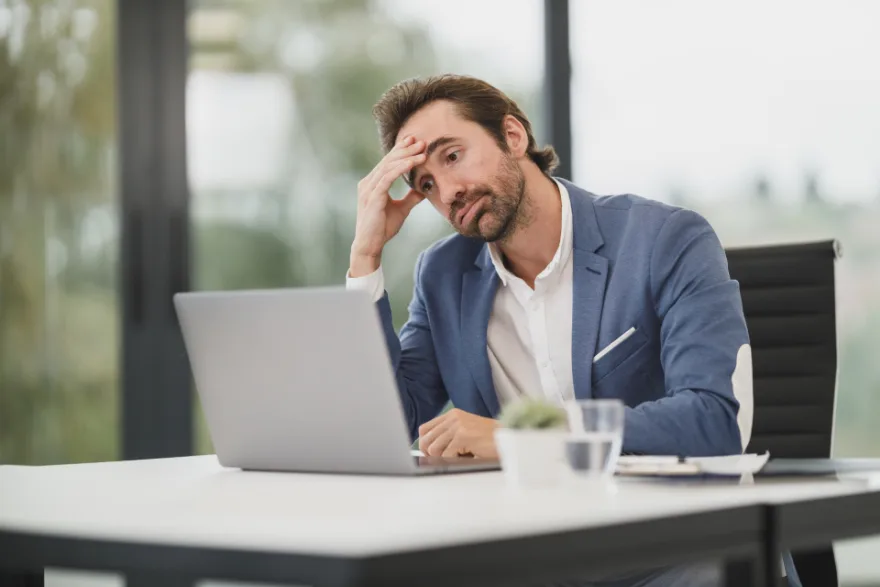
How much sleep should you actually be getting?
Seven hours or more a night, on a regular basis, for any adult between 18 and 60. That is the joint recommendation of the American Academy of Sleep Medicine and the Sleep Research Society, and it is the figure the CDC adopted.
The number came out of a consensus process in 2015 in which a panel of 15 sleep experts reviewed 5,314 published articles before voting.1 It is a general health recommendation rather than a promise about energy, and it is worth reading it as a floor rather than a target.
Two things make that floor harder to reach than it looks. The first is caffeine timing. In a study by Drake and colleagues in the Journal of Clinical Sleep Medicine, 400 mg of caffeine still disturbed sleep measured at home when it was taken six hours before bed.2 Six hours before bed, not one.
The dose in that trial was 400 mg, so a single small cup late in the day is not the same test.
The second is alcohol. A systematic review by Ebrahim and colleagues found that at every dose alcohol shortens the time it takes to fall asleep and increases disruption in the second half of the night, and that at moderate and high doses it delays and reduces REM sleep.4
If you want the detail on hours, caffeine cut-off times and what a realistic wind-down looks like, that is a separate guide: how much sleep you need in your 40s.
Do screens at night really make a difference?
One experiment says yes, with a caveat you should hear before you quote it at anyone. It was a very small study, and it tested light rather than content.
Chang, Aeschbach, Duffy and Czeisler published it in PNAS in January 2015. Twelve adults spent two weeks reading either a light-emitting e-reader or a printed book before bed. The e-reader nights suppressed melatonin by more than 55 percent on average, delayed the body clock, and left participants less alert the next morning.3
Twelve people is a small sample, and the comparison was a glowing screen against paper. It is a reasonable reason to dim the last hour of your evening. It is not proof that your phone is the single cause of your tiredness.
The practical version is simple to test. Put the phone on a charger that is not within arm's reach of the bed, drop the lights in the room an hour before you plan to sleep, and see what a week feels like. Results vary, and one week is an experiment rather than a verdict.
Can morning daylight help you feel more awake?
Probably worth trying, and the cost of finding out is about ten minutes. A small study on the body clock and a larger review on alertness point the same way.
Wright and colleagues reported in Current Biology in 2013 that a week of natural light exposure shifted the internal clock into line with sunrise and sunset.5 It is a striking result and it is also a study of five people.
The broader backing is newer. Mu and colleagues pooled 29 studies with 1,210 healthy participants in Neural Regeneration Research in 2022. Light exposure improved alertness, both as people rated it themselves and as measured on tests, and cooler, whiter light did better than warm light.13 Those participants averaged about 26 years old and the studies mostly used lamps rather than a walk outside, so it supports the direction rather than proving the ten-minute version.
What makes it worth testing anyway is the price. Getting outside for ten minutes in the morning costs you nothing, so a week of trying it is cheap. The full morning version, in the order that makes it easy to keep, is here: a morning routine for men over 40 that survives a real week.
Does exercise fix tiredness or make it worse?
Regular exercise tends to lower fatigue rather than add to it. A meta-analysis of 81 randomised trials backs that up, and a smaller trial in tired, sedentary adults points the same way.
Puetz, Flowers and O'Connor ran a randomised trial published in Psychotherapy and Psychosomatics in 2008. Thirty-six sedentary adults with persistent fatigue took part. Low-intensity exercise reduced fatigue, and the feeling of energy improved in the two exercise groups.8
That trial is small, 36 people, and the participants were young adults. The steadier ground is a 2022 meta-analysis by Wender, Manninen and O'Connor in Frontiers in Psychology, which pooled 81 randomised trials with 7,050 participants. Compared with control groups, exercise training lowered feelings of fatigue by a small margin, raised energy by a small-to-moderate margin and raised vitality by a moderate one, and those results held up across several sensitivity checks.14 The authors sum it up as small-to-moderate average improvements from a moderate-intensity programme, so expect a steady nudge rather than an overnight change.
For how much, the national benchmark is the second edition of the Physical Activity Guidelines for Americans: 150 to 300 minutes a week of moderate aerobic activity, plus muscle-strengthening activity on two days.7 Spread across the week, that is roughly 20 to 45 minutes a day.
Step counts get quoted constantly, so here is the study and what it measured. Paluch and colleagues pooled 15 cohorts, 47,471 adults and 3,013 deaths in The Lancet Public Health in 2022. For adults under 60, the risk of premature death levelled off at roughly 8,000 to 10,000 steps a day, and for adults over 60 at roughly 6,000 to 8,000.6 That is mortality, it is association rather than cause, and it measured nothing about how energetic anyone felt. Use it as a rough reference, not an energy promise.
What helps when stress is running the evening?
Five minutes a day of deliberate slow breathing has a randomised trial behind it, with 108 participants.
Balban and colleagues published it in Cell Reports Medicine in 2023. One hundred and eight participants practised five minutes a day for a month. Cyclic sighing, which means making the exhale longer than the inhale, improved mood and lowered resting breathing rate more than mindfulness meditation did.9
What the trial measured was mood and breathing rate only. It is not a treatment for anxiety. Within those limits, five minutes is a small enough ask that it is worth a month of your evenings.
Does what you eat and drink change how tired you feel?
The numbers below are daily protein totals from published guidance, nothing more.
The baseline for protein is the Institute of Medicine's recommended allowance of 0.8 g per kilogram of body weight a day for adults. For healthy people who train, the International Society of Sports Nutrition position stand (Jäger and colleagues, 2017) puts the useful range at 1.4 to 2.0 g per kilogram a day.10 Anyone with kidney disease should talk to a doctor before changing protein intake, and that is not a formality.
Alcohol belongs in this section rather than in the fun one, because the Ebrahim review found sleep disruption in the second half of the night at every dose tested.4 You do not have to give it up to act on that. Moving the last drink earlier in the evening is a smaller change than quitting, and it is a practical suggestion based on where the review found disruption, not a tested result.
Why does changing everything at once fail?
Because habits take time to stick: in Lally and colleagues the median was 66 days.
Lally and colleagues followed 96 volunteers for 12 weeks in the European Journal of Social Psychology. Among the 48 percent who reached automaticity, the median time was 66 days, with a range from 18 to 254 days. Missing a single day did not meaningfully damage the process.11
Two things follow. The first is that one month builds a base, and the habit keeps building after that. The second is more useful: a missed day is not a failed attempt, because the data says the curve absorbs it. Pick one lever, give it a week, then add the next.
When should tiredness send you to a doctor?
When it persists or gets worse.
The Mayo Clinic's position is the one to keep in mind: fatigue is most often linked to habits such as poor sleep and lack of exercise, but it can also be a symptom of anaemia, a thyroid problem, sleep apnoea, depression or a medication already in use.12 Those are diagnosed by a doctor. They are not diagnosed by reading articles, including this one.
If your tiredness persists or gets worse, talk to your doctor.
Frequently asked questions
Why am I so tired after 40 when nothing has changed?
The Mayo Clinic notes that fatigue is most often linked to habits such as poor sleep and lack of exercise, although it can also be a symptom of a condition that needs treatment. One place to start is sleep length: the American Academy of Sleep Medicine and the Sleep Research Society recommend seven hours or more a night for adults aged 18 to 60.
How many hours of sleep do I need in my 40s?
Seven or more on a regular basis. That figure comes from a 2015 consensus panel of 15 sleep experts who reviewed 5,314 published articles, and it was adopted by the CDC. It is a general health recommendation rather than a guarantee about energy, and it works better as a floor than as a target.
Does looking at my phone in bed really keep me awake?
One experiment suggests screen light matters, with an honest caveat. Chang and colleagues, publishing in PNAS in 2015, had 12 adults read either a light-emitting e-reader or a printed book before bed. The e-reader nights suppressed melatonin by more than 55 percent on average, delayed the body clock and reduced next-morning alertness. Twelve people is a small sample, and the study tested light rather than content.
I am too tired to exercise. Will exercise make it worse?
One randomised trial points the other way. Puetz, Flowers and O'Connor randomised 36 sedentary adults with persistent fatigue in 2008 and found that low-intensity exercise reduced fatigue, with the feeling of energy improving in the two exercise groups. The trial was small and the participants were young adults, so treat it as a direction rather than a dose. A 2022 meta-analysis of 81 randomised trials and 7,050 participants points the same way: exercise training lowered feelings of fatigue by a small margin and raised energy by a small-to-moderate one.
When should I see a doctor about being tired?
When the tiredness persists or gets worse despite reasonable sleep, daylight and movement, or when it comes with other symptoms. The Mayo Clinic lists anaemia, thyroid problems, sleep apnoea, depression and medication side effects among causes that need treatment rather than better habits.
Sources
- Watson NF, Badr MS, Belenky G, et al. Recommended amount of sleep for a healthy adult: a joint consensus statement of the American Academy of Sleep Medicine and Sleep Research Society. 2015. Panel of 15 experts, 5,314 articles reviewed; adults aged 18 to 60 should sleep 7 or more hours per night on a regular basis. aasm.org and cdc.gov/sleep
- Drake C, Roehrs T, Shambroom J, Roth T. Caffeine effects on sleep taken 0, 3, or 6 hours before going to bed. Journal of Clinical Sleep Medicine. 2013;9(11):1195-1200. 400 mg of caffeine disturbed home-measured sleep even when taken 6 hours before bed. pubmed.ncbi.nlm.nih.gov/24235903
- Chang AM, Aeschbach D, Duffy JF, Czeisler CA. Evening use of light-emitting eReaders negatively affects sleep, circadian timing, and next-morning alertness. PNAS. 2015 Jan 27;112(4):1232-7. 12 adults, 2 weeks; melatonin suppressed by more than 55 percent on average versus a printed book. pnas.org
- Ebrahim IO, Shapiro CM, Williams AJ, Fenwick PB. Alcohol and sleep I: effects on normal sleep. Alcoholism: Clinical and Experimental Research. 2013;37(4):539-49. Systematic review; at all doses alcohol reduces sleep onset latency and increases disruption in the second half of the night; REM delayed and reduced at moderate and high doses, with no clear trend at low doses. onlinelibrary.wiley.com
- Wright KP Jr, McHill AW, Birks BR, et al. Entrainment of the human circadian clock to the natural light-dark cycle. Current Biology. 2013;23(16):1554-8. Five participants; one week of natural light exposure aligned internal timing with sunrise and sunset. cell.com
- Paluch AE, Bajpai S, Bassett DR, et al. Daily steps and all-cause mortality: a meta-analysis of 15 international cohorts. The Lancet Public Health. 2022 Mar;7(3):e219-e228. 47,471 adults, 3,013 deaths; risk levelled off at about 8,000 to 10,000 steps a day under age 60 and about 6,000 to 8,000 over 60. Mortality outcome, association rather than causation. thelancet.com
- US Department of Health and Human Services. Physical Activity Guidelines for Americans, 2nd edition. Adults need 150 to 300 minutes a week of moderate-intensity aerobic activity plus muscle-strengthening activity on 2 days a week. odphp.health.gov
- Puetz TW, Flowers SS, O'Connor PJ. A randomized controlled trial of the effect of aerobic exercise training on feelings of energy and fatigue in sedentary young adults with persistent fatigue. Psychotherapy and Psychosomatics. 2008;77(3):167-174. 36 sedentary young adults; low-intensity exercise reduced fatigue and feelings of energy improved in the two exercise groups. pubmed.ncbi.nlm.nih.gov/18277063
- Balban MY, Neri E, Kogon MM, et al. Brief structured respiration practices enhance mood and reduce physiological arousal. Cell Reports Medicine. 2023;4(1):100895. Randomised, 108 participants, 5 minutes a day for one month; cyclic sighing improved mood and lowered respiratory rate more than mindfulness meditation. cell.com
- Jäger R, Kerksick CM, Campbell BI, et al. International Society of Sports Nutrition position stand: protein and exercise. Journal of the International Society of Sports Nutrition. 2017;14:20. 1.4 to 2.0 g per kilogram of body weight per day for healthy exercising individuals; the Institute of Medicine recommended allowance for adults is 0.8 g per kilogram per day. pubmed.ncbi.nlm.nih.gov/28642676
- Lally P, van Jaarsveld CHM, Potts HWW, Wardle J. How are habits formed: modelling habit formation in the real world. European Journal of Social Psychology. 2010;40(6):998-1009. 96 volunteers over 12 weeks; among the 48 percent who reached automaticity the median was 66 days, range 18 to 254 days; missing one day did not meaningfully affect the process. onlinelibrary.wiley.com
- Mayo Clinic. Fatigue: causes. Fatigue is most often linked to habits such as poor sleep and lack of exercise, but can be a symptom of conditions that need treatment, including anaemia, thyroid problems, sleep apnoea, depression and medication side effects. mayoclinic.org
- Mu YM, Huang XD, Zhu S, Hu ZF, So KF, Ren CR, Tao Q. Alerting effects of light in healthy individuals: a systematic review and meta-analysis. Neural Regeneration Research. 2022;17(9):1929-1936. 29 studies (27 crossover, 2 parallel-group), 1,210 healthy participants, mean age 25.6; light improved subjective and objective alertness; higher colour temperature light did better than warm light. pubmed.ncbi.nlm.nih.gov/35142669
- Wender CLA, Manninen M, O'Connor PJ. The effect of chronic exercise on energy and fatigue states: a systematic review and meta-analysis of randomized trials. Frontiers in Psychology. 2022;13:907637. 81 randomised trials, 7,050 participants; exercise training reduced fatigue (small effect), increased energy (small to moderate) and increased vitality (moderate) compared with controls. pubmed.ncbi.nlm.nih.gov/35726269
About the author: Ray Delgado
I write the men's health guides here. Where I cite a number, I name the study, how many people were in it and what was actually measured, because a headline with no sample size attached is not evidence. Where the research is thin, I say it is thin.
Not a professional qualification. I am not a doctor, urologist or pharmacist, and nothing here is medical advice. Updated 24 September 2026.
This article is general information, not medical advice, and it is not a diagnosis. It contains no affiliate links. Other pages on NutraRank, including our product reviews, do carry affiliate links, and we may earn a commission from them at no additional cost to you. Talk to a doctor before you change your routine if you take medication or have a health condition, and see one if your tiredness is persistent or getting worse.